
Some photographs do not ask us to think. They simply ask us to slow down.
There are days when looking at new photographs feels like too much effort. Not because images have lost their interest, but because attention itself feels hurried. On those days, I do not look for something new to notice or understand. Instead, I find myself returning to familiar images — photographs that require nothing from me, that allow my attention to settle rather than move on. They do not compete for interest or interpretation. They simply offer a place to pause.
Over time, I noticed that certain photographs quietly drew me back. Not the most dramatic images, nor the ones I considered technically strong, but those that seemed to hold a steady atmosphere. I did not return to analyse them or to remember a particular moment. I returned because looking at them felt unhurried, as though the photograph itself moved at a slower pace than the rest of the day.
One place I return to often through photographs is a small creek I visited some time ago. What I remember most is not the scenery itself, but the stillness. The water was barely moving, reflecting the trees that leaned quietly over it. Apart from distant birds, the area was silent, and for a while I realised I had the place entirely to myself. Nothing asked for attention. There was no sense of needing to move on or look for a better view. Standing there felt unhurried, as though the rhythm of the place existed independently of time passing elsewhere.
When I look at the photographs from that creek now, I notice that they carry the same quiet pace. I do not return to them to remember the day in detail or to relive the experience exactly. Instead, the images recreate something simpler — the feeling of attention slowing down. The reflections, the soft light, and the uninterrupted surface of the water seem to hold a steadiness that remains available whenever I need it.
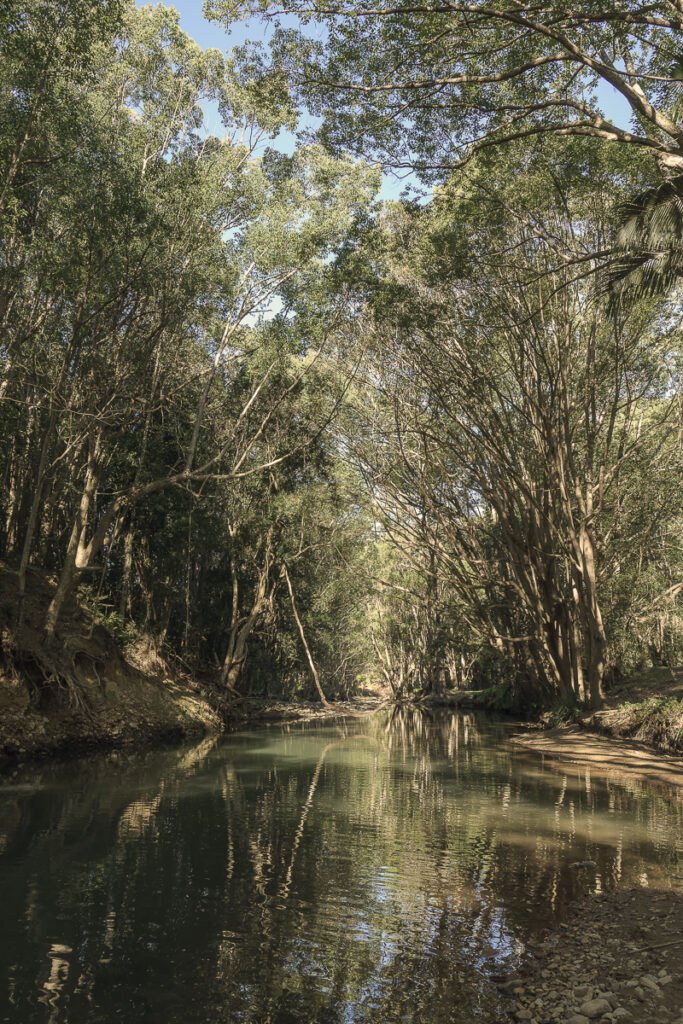
“A place I return to, not to remember, but to slow down.”
I have come to think that some photographs function less as memories and more as places. We return to them in much the same way we might revisit a familiar walk or sit in a favourite chair — not seeking discovery, but steadiness. They do not ask us to interpret or evaluate them. What matters is their consistency. While much around us changes from day to day, these images remain quietly the same, allowing our attention to settle without effort.
Perhaps this is why certain photographs remain important long after we stop thinking about when they were made. There are moments when concentration feels difficult or the day carries more noise than we expected, and without consciously deciding, we return to images that feel steady. The photograph does not change our circumstances or offer solutions. Instead, it adjusts our pace, inviting us to look a little longer and settle into the moment again.
Most of us keep photographs like this without giving them much thought. They are rarely the images we show first or speak about often, yet we return to them repeatedly. Sometimes we pause only briefly before moving on again, but the effect lingers — a small sense of quiet restored without effort. Over time, these photographs become less about what they depict and more about how they allow us to feel when we encounter them again.
Perhaps this is why some photographs remain part of our lives long after others lose their appeal. They do not ask to be admired or fully understood. They simply wait, offering the same quiet presence each time we return. In a world that often feels in motion, these images remind us that stillness is not something we need to search for elsewhere. Sometimes it is already available, held patiently within a photograph we have learned to visit again and again.
I write and create around presence, time, and the quieter ways we live with images. If this reflection resonated, you may find similar moments in my photography.
Read More Stories Like This:
- Why Certain Places Feel Familiar Even When We’ve Never Been There
- I No Longer Need Every Photograph to Explain Itself
- Some Photographs Feel More Honest Than Others