
Most of life passes by unnoticed.
Thousands of moments disappear every day without leaving any permanent trace at all. We walk past people, buildings, conversations, shadows, reflections, weather, gestures, expressions, and fleeting fragments of life without feeling any need to preserve them.
And then, suddenly, something makes us stop.
Not necessarily the most dramatic thing.
Not the most beautiful.
Not even the most important.
Just something we feel compelled to photograph.
I have become increasingly fascinated by that instinct over the years. Not just what photographs mean afterward, but what causes us to raise the camera in the first place.
Why this moment and not the thousands surrounding it?
Sometimes the answer seems obvious. A spectacular landscape. A major event. Someone we love. But many photographs are taken for reasons that are much harder to explain.
A stranger sitting alone by water.
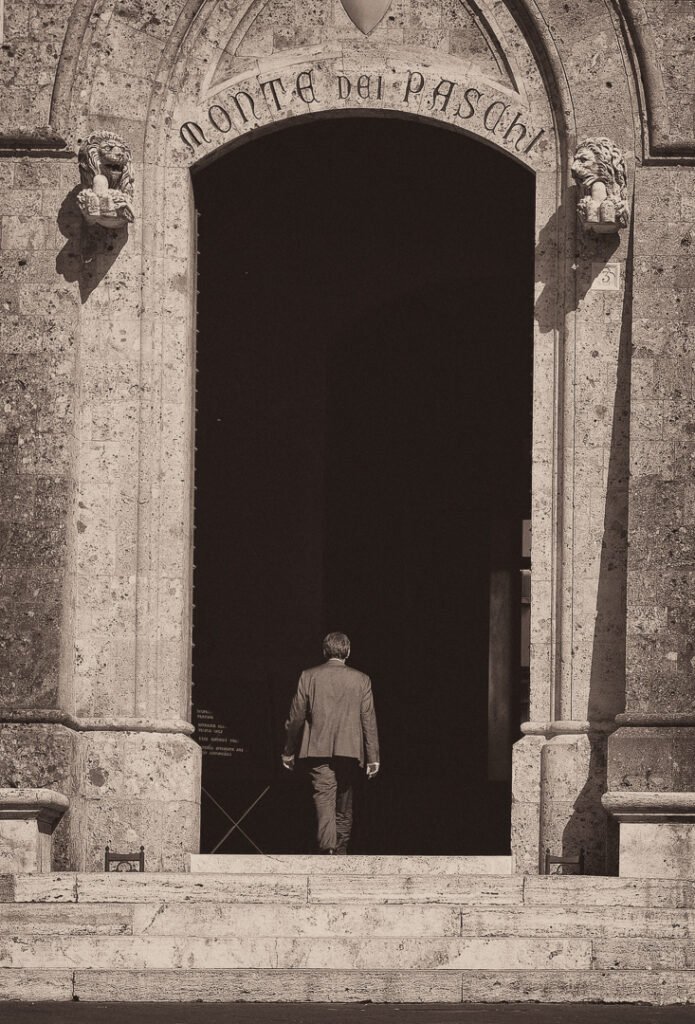
A doorway filled with shadow.
A child staring at waves.
A passing reflection on glass.
Another person might walk straight past these scenes without noticing anything at all.
Yet something in us pauses.
I suspect we photograph moments not simply because we see them, but because we recognise something of ourselves inside them.
Not consciously, at least not at first.
The recognition often happens faster than language.
A mood feels familiar.
A scene carries emotional tension.
A gesture reminds us of something we cannot immediately name.
The light briefly transforms an ordinary moment into something that feels emotionally alive.
Only later do we begin trying to explain why the photograph mattered.
This may also explain why photographers are often drawn repeatedly toward similar subjects without fully intending to be. Certain people photograph loneliness. Others photograph stillness, distance, weather, aging, solitude, movement, connection, decay, or quiet human moments. Over time, patterns begin emerging that reveal as much about the photographer as the world being photographed.
The camera becomes less a recording device and more a form of emotional attention.
What fascinates me most is how selective this attention really is.
We do not photograph life evenly.
We photograph what interrupts us emotionally.
Sometimes that interruption is beautiful. Sometimes unsettling. Sometimes deeply personal. Sometimes we do not understand it ourselves until years later.
I have photographs I barely remember taking that now feel emotionally significant to me. And I have technically stronger images that I no longer feel connected to at all.
This makes me think that photographs are often less about the external world than the internal state of the person holding the camera.
Two people can stand in exactly the same place and come away with completely different photographs because they are not truly responding to the same thing.
One notices architecture.
Another notices isolation.
Another notices light.
Another notices memory.
The world remains the same.
What changes is the emotional filter through which it is being seen.
Perhaps that is why certain photographs continue holding our attention long after others fade. They are not simply records of what was there. They are traces of what we were emotionally prepared to notice in that moment.
And often, that says more about us than we realise at the time.
I write and create around presence, time, and the quieter ways we live with images. If this resonated, you may find similar reflections in my photography.