
Why some images don’t stay the same—even when nothing in them changes.
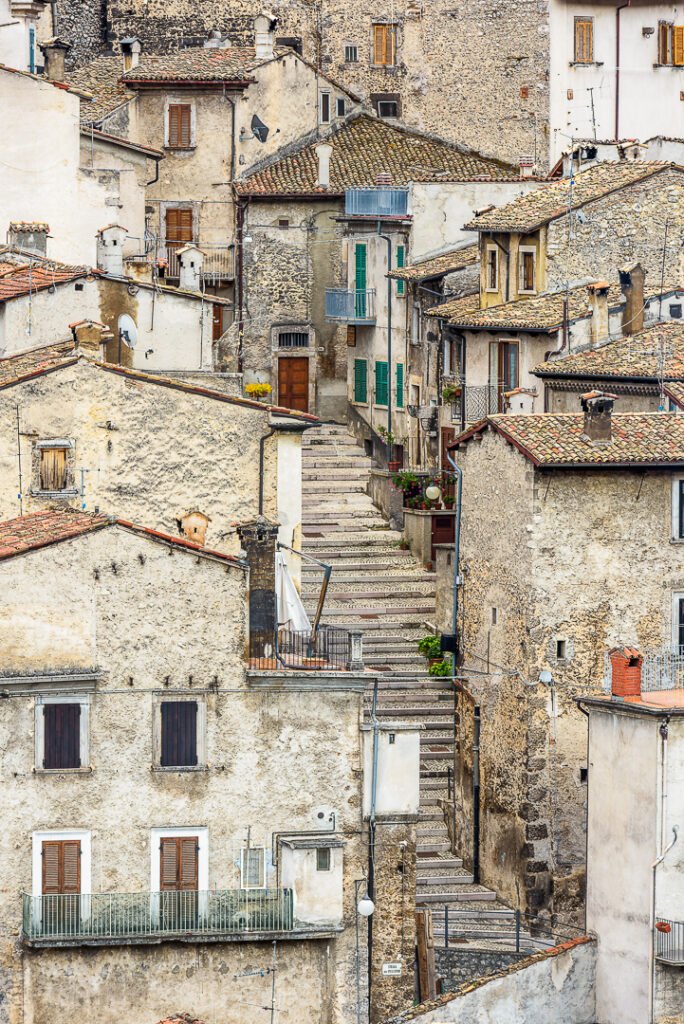
There is a photograph I’ve returned to for years.
At first, I didn’t think much of it.
Stone buildings. A narrow path. A set of steps rising quietly through the frame. Nothing dramatic. Nothing asking to be noticed.
But I kept coming back to it.
Not because it demanded attention.
Because it didn’t.
The first time I really looked, I saw structure.
Repetition. Texture. The way everything seemed to settle into place. It felt complete. The kind of photograph you might describe as “well composed” and then move on from.
And for a while, that was enough.
Later, I noticed the staircase.
Not just as a shape, but as a direction.
It didn’t dominate the image. But once I saw it, everything else seemed to organise around it.
It stopped being about buildings.
It became about where something might lead.
Some time after that, I noticed what wasn’t there.
No people.
There were signs of life everywhere. Doors. Windows. Small details that suggested presence.
But in that moment, there was no one.
What had felt settled now felt still.
What had felt complete now felt paused.
The photograph hadn’t changed.
But what it held had.
There were days when it felt peaceful.
A place where nothing needed to happen. Where time moved slowly, if it moved at all.
And then there were other days.
Days when the same image felt distant. As though whatever it offered belonged to another time.
The path was still there.
But I wasn’t sure it was mine.
It took me a while to understand what was happening.
The photograph wasn’t fixed.
Not in the way I had assumed.
We think photographs capture a moment.
And technically, they do.
But the meaning of that moment is never stable.
It moves.
Not because the image changes, but because we do.
Each time I returned, I brought something different with me.
A mood.
A memory.
A question I didn’t quite know I was asking.
And the photograph met me there.
Not with answers.
But with a slightly different reflection.
We often say we keep photographs because they are meaningful.
But meaning isn’t something a photograph holds on its own.
It forms in the space between the image and the person looking at it.
And that space is never the same twice.
Some photographs give everything immediately.
You see them once, and you understand them.
There’s nothing wrong with that.
But there is another kind.
The kind that stays.
The kind that doesn’t fully resolve.
The kind that shifts, almost imperceptibly, each time you return.
Those are the photographs we live with.
Not because they say something clearly.
But because they continue to say something differently.
I still look at that image from time to time.
Sometimes I see a place.
Sometimes a path.
Sometimes just light on stone.
And occasionally, something I didn’t expect at all.
That is what keeps me coming back.
Not the photograph itself.
But the quiet understanding that I won’t see the same thing twice.
And perhaps that’s what we’re really holding onto —
not what a photograph meant,
but what it keeps becoming.