
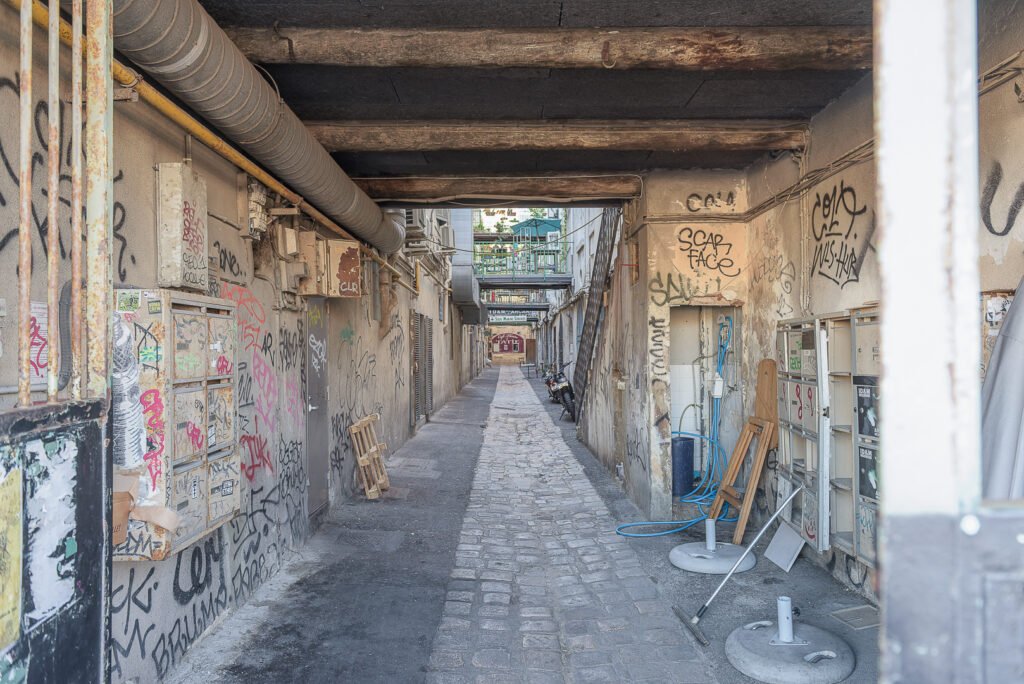
There are photographs we hold onto for years.
Not because they are remarkable.
Not because they are especially well made.
But because, at some point, they meant something to us.
And then, without us really noticing when it happened, that meaning fades.
The photograph is still there.
Unchanged.
But whatever we once saw in it is no longer as clear.
It can be difficult to explain.
Nothing obvious has been lost.
The subject remains.
The place is still recognisable.
The details are exactly as they were.
And yet, something essential is missing.
We tend to assume that meaning belongs to the photograph.
That it lives in the image itself.
But over time, it becomes clear that this isn’t quite true.
Meaning doesn’t sit inside the photograph.
It sits in the space between the image and the person looking at it.
And that space changes.
A photograph taken years ago might once have been tied to a moment.
A place you returned to often.
A time in your life that felt certain.
A feeling that was easy to recognise.
You didn’t have to think about it.
The meaning was immediate.
But as life moves on, those connections loosen.
You go somewhere else.
You become someone slightly different.
The things that once felt important shift, often without you realising it.
The photograph doesn’t follow you.
It stays where it was.
When you come back to it later, you might still recognise it.
But recognition is not the same as connection.
You might remember why it mattered.
But you don’t feel it in quite the same way.
Sometimes we interpret this as a failure.
We assume the photograph wasn’t as meaningful as we thought.
Or that we misjudged it in the first place.
But that’s not what’s happening.
The photograph hasn’t lost its meaning.
It has lost its relationship with the person you were when you first saw it.
And that relationship can’t always be recreated.
There is a quiet honesty in this.
Not everything we connect with is meant to stay.
Some things belong to a particular time, a particular version of ourselves.
They don’t disappear.
But they don’t remain the same either.
Occasionally, something different happens.
You return to a photograph after many years, expecting that distance.
And instead, something still responds.
Not in the same way.
But in a way that feels just as real.
Those photographs tend to stay.
Not because they never changed.
But because they were never tied to a single moment to begin with.
Most photographs don’t work like that.
Most are more fragile.
They depend on context.
On memory.
On feeling.
On the version of you that first recognised them.
And when those things shift, the photograph becomes quieter.
More distant.
Less certain.
This isn’t something to correct.
It’s something to notice.
If you look through your own photographs, you’ll probably see it.
Images you once returned to often, now sitting unnoticed.
Not rejected.
Just no longer needed in the same way.
They haven’t failed.
They’ve simply done their work.
And perhaps that’s enough.
Some photographs don’t lose their meaning.
They outgrow the moment that once gave it to them.