
Some things don’t ask to be explained. They ask to be allowed.
For a long time, I thought I needed to understand an image before I could live with it.
I wanted to know what it meant.
What it was saying.
Why it moved me.
If I couldn’t articulate that, I felt unfinished somehow. As though the experience hadn’t quite completed itself.
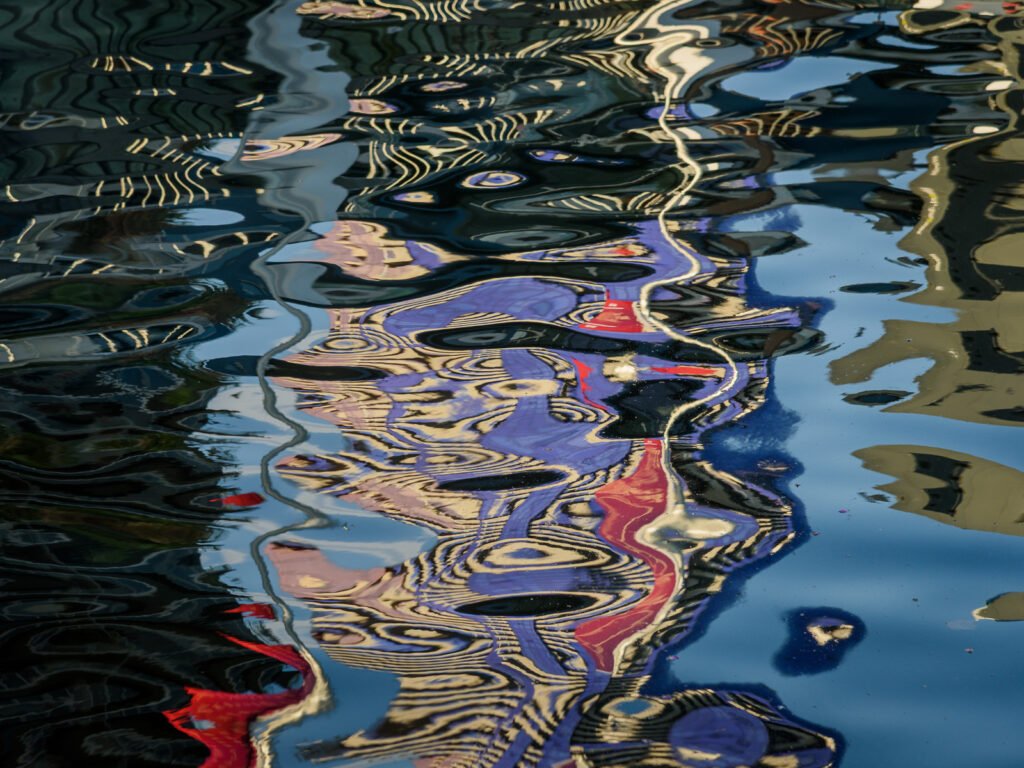
But this photograph changed that.
Not because it revealed anything.
Because it didn’t.
It didn’t arrive with a message. It didn’t point toward a conclusion. It didn’t invite interpretation or explanation. It simply existed, quietly, without asking to be unpacked.
And that unsettled me at first.
I kept waiting for clarity.
For language.
For a reason.
None came.
And slowly, I realised that was the point.
Letting Meaning Be Optional
We’re taught to make sense of things.
To interpret.
To explain.
To assign meaning.
It’s how we navigate the world. How we share experience. How we connect.
But not everything wants that kind of attention.
This image doesn’t respond to analysis. It doesn’t open up when questioned. The harder I tried to understand it, the further away it seemed.
So I stopped trying.
I let it be unclear.
Unresolved.
Incomplete.
And something unexpected happened.
The image softened.
Not in appearance, but in presence. It became less demanding. Less insistent. Less like a problem to be solved. I no longer felt the need to “get it right.”
I could just be with it.
That felt unfamiliar at first. Almost irresponsible. As though I were missing something important.
But over time, it felt like relief.
I realised how much energy I spend trying to make sense of things that don’t actually require it. How often I feel compelled to turn experience into understanding, instead of simply letting it be experience.
This photograph offered a different invitation.
You don’t need to understand me.
You don’t need to explain yourself.
You don’t need to arrive anywhere.
Just stay.
And that, quietly, was enough.
The Pressure to Explain
There is a subtle pressure to explain ourselves.
Not always spoken. Not always direct. But present, nonetheless. In conversations. In choices. In preferences. In the way we talk about what we love.
Why this image?
What does it mean?
What are you trying to say?
They’re reasonable questions. Curious questions. Often well-intentioned.
But they carry an assumption.
That meaning must be articulated.
That experience must be translated.
That feeling must be justified.
I’ve felt that pressure myself. The instinct to make sense of things for other people. To offer context. To provide an explanation that makes an experience legible.
It’s a way of being polite. Of being understood. Of making sure we’re not seen as vague or indulgent or unclear.
But this image resists that.
Whenever I try to explain it, the explanation feels thinner than the experience. Less accurate. Less true. The words don’t quite hold what the image holds.
And so I’ve learned to stop reaching for them.
That hasn’t always been comfortable.
There’s a vulnerability in saying, “I don’t know.”
Or, “I don’t need to.”
In allowing something to matter without being able to defend why.
But over time, that discomfort softened. I began to notice how often explanation becomes a substitute for trust. How often we explain not because it’s needed, but because we feel uneasy letting something stand on its own.
This photograph doesn’t require defence.
It doesn’t ask to be clarified.
It doesn’t need to be made acceptable.
It doesn’t need permission to exist.
Living with it has been a small practice in letting that be enough.
In allowing myself the same courtesy.
Trust Without Comprehension
There is a quiet trust that comes from not needing to understand.
At first, that feels counterintuitive. We’re taught that understanding is how we orient ourselves. How we feel safe. How we know where we stand.
But this photograph has shown me something different.
I don’t understand it in the usual way. I can’t summarise it neatly. I can’t point to a single reason it matters. And yet, I trust it.
I trust the way it sits in the room.
I trust the way it feels over time.
I trust the way it asks nothing of me.
That trust didn’t arrive all at once. It grew slowly, through repetition. Through noticing how the image remained steady even as my own moods shifted. How it didn’t need to change in order to stay relevant.
Some days, it feels distant.
Some days, it feels close.
Some days, I barely notice it at all.
And that’s fine.
I no longer feel the need to extract something from it. To make it speak. To make it useful. I let it be what it is, and allow my response to be whatever it happens to be that day.
That feels like trust.
Not the kind that demands certainty.
The kind that allows variability.
There is something deeply grounding in that. In recognising that not everything meaningful needs to be grasped. That some things are reliable precisely because they don’t require interpretation.
This image doesn’t promise clarity.
It promises presence.
And over time, I’ve come to realise how rare that is.
How Living With Ambiguity Changes a Space
When nothing needs to be explained, the room feels different.
Not emptier.
Not unfinished.
Just quieter.
There is less tension in the air. Less sense that something is waiting to be clarified or completed. The space no longer feels like it’s holding a question that needs an answer.
It becomes more spacious.
This photograph contributes to that in a subtle way. It doesn’t anchor the room with meaning. It doesn’t organise the space around itself. It doesn’t declare why it belongs there.
And because of that, everything else seems to loosen.
I find myself less inclined to tidy the room emotionally. Less inclined to justify why things are the way they are. The space feels more forgiving. More tolerant of pauses, of unfinished thoughts, of moments that don’t quite go anywhere.
That’s not something I would have noticed earlier in life.
I used to want rooms to make sense. To have a clear purpose. To feel intentional. There was comfort in that clarity. A sense of control.
But clarity can also be demanding.
Ambiguity, I’ve learned, can be gentle.
Living with an image that doesn’t insist on being understood has made the room feel more like a place to inhabit than a place to manage. It doesn’t ask me to complete a thought before I can rest.
It allows the space to be what it is.
And in doing that, it allows me to be the same.
Fewer Answers, More Peace
There was a time when unanswered questions felt uncomfortable.
Like loose ends.
Like something unfinished.
Like a failure to think things through.
I don’t experience them that way anymore.
That shift didn’t happen suddenly. It came gradually, almost unnoticed, as other things softened too. Urgency eased. Certainty loosened its grip. The need to arrive somewhere definite became less compelling.
With time, I’ve come to see that not knowing isn’t always a gap.
Sometimes it’s a resting place.
This photograph sits comfortably in that space. It doesn’t resolve itself over time. It doesn’t reveal more the longer you live with it. It doesn’t move toward clarity.
And yet, it remains satisfying.
That would have unsettled me once. I would have felt the urge to “get” it. To finish the thought. To reach the end of whatever conversation I believed it was having with me.
Now, I’m content to let it be unfinished.
There is peace in that. In allowing something to matter without demanding that it explain itself fully. In recognising that meaning doesn’t always deepen through analysis. Sometimes it deepens through familiarity.
Through living alongside something quietly.
Through letting it be part of the background of your days.
Through not asking it to prove itself.
I’ve noticed that this acceptance doesn’t feel like giving up.
It feels like arrival.
Not at an answer.
At ease.
The Freedom of Not Needing to Resolve Everything
There is a quiet freedom in not needing to arrive.
Not needing to close the loop.
Not needing to name the feeling.
Not needing to reach a conclusion that makes sense to anyone else.
This photograph offers that freedom.
It doesn’t move toward resolution. It doesn’t promise understanding later. It doesn’t suggest that if I sit with it long enough, everything will eventually become clear.
It simply remains as it is.
And over time, I’ve realised how rare that is.
So much of life asks us to finish things. To wrap them up neatly. To explain what happened, what it meant, what we learned. We become accustomed to translating experience into clarity, even when clarity isn’t what the experience offered.
This image doesn’t participate in that.
It doesn’t need to be completed.
It doesn’t need to be justified.
It doesn’t need to be resolved.
Living with it has taught me that this is not a lack.
It’s a release.
A release from the need to be certain.
From the need to be articulate.
From the need to be right.
I don’t have to understand everything that matters to me. I don’t have to explain why something stays. I don’t have to turn every experience into a statement.
Some things are allowed to simply be part of my life.
Unfinished.
Untranslated.
Undemanding.
This photograph is one of them.
And in letting it remain that way, I’ve found something I didn’t know I was missing.
Ease.
I write and create around presence, ambiguity, and the quieter forms of understanding. If any of this resonated, you may find similar threads in my photography.