
The strange feeling of recognising a place that should be completely unknown to us.
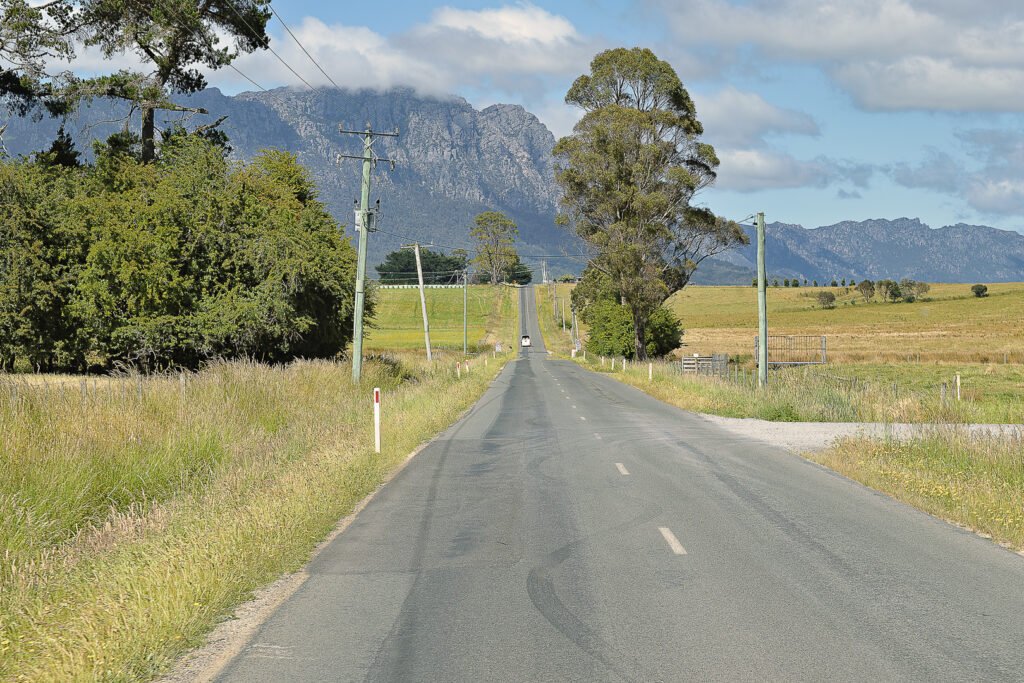
Marie and I were travelling through a part of Australia neither of us had visited before.
The road stretched ahead between paddocks and distant mountains. It was an ordinary scene in many ways. Yet as we drove, I felt something unexpected.
I felt as though I had been there before.
I knew I hadn’t. There was no memory attached to that particular road. No family connection. No previous visit.
And yet the feeling remained.
Perhaps it reminded me of a trip to the Grampians when I was a teenager. Perhaps it echoed countless country roads I had travelled over the years. Whatever the reason, the landscape felt strangely familiar.
It’s not the first time this has happened to me.
Over the years I have arrived in unfamiliar towns, stood in front of old buildings, or looked across quiet landscapes and experienced the same sense of recognition.
When I was younger, I rarely paid attention to these moments.
Now I find them fascinating.
How can a place we’ve never visited feel as though we’ve known it all our lives?
We Experience Places Before We Understand Them
I’ve come to believe that our response to a place is often emotional before it becomes intellectual.
We don’t analyse first.
We feel first.
I remember visiting the Pantheon in Rome for the first time. I expected to admire the architecture. Instead, I found myself feeling something much harder to describe.
A sense of belonging.
That feeling surprised me because there was no logical reason for it. I had never been there before.
The same thing sometimes happens in landscapes.
I arrive somewhere new, step out of the car, and immediately feel at ease. Time seems to slow. The pressure to be somewhere else disappears. For a few moments, simply being present feels enough.
What interests me is that we often can’t explain why.
There is no obvious memory attached to the place.
Yet somehow it feels like home.
The Role of Memory and Pattern Recognition
Human beings are natural pattern seekers.
For most of our history, recognising patterns helped us survive. It allowed us to make sense of our surroundings and respond quickly to opportunities and threats.
That ability still shapes how we experience the world today.
Our memories are not stored as complete recordings. Instead, they are woven together from fragments: light, texture, sounds, emotions, smells, and countless small details.
When we arrive somewhere new, our minds immediately begin comparing what we are seeing with experiences we have had before.
A place may remind us of childhood holidays, books we have read, films we have watched, or landscapes we encountered years ago and barely remember.
The place itself may be unfamiliar.
The feeling is not.
Perhaps that is why familiarity can feel so powerful. We are not recognising the location. We are recognising something within ourselves.
The Landscapes We Carry Inside Us
I suspect each of us carries an invisible collection of landscapes.
Not literal places.
Emotional places.
Places associated with safety, belonging, freedom, wonder, solitude, or peace.
When a new location resembles one of these internal landscapes, something clicks.
The feeling arrives before the explanation.
We may never fully understand why a particular road, valley, coastline, or building feels right. But the experience can be unmistakable.
The place resonates with something we were already carrying.
Why Photographs Sometimes Trigger the Same Feeling
I’ve noticed that photographs can create a similar response.
Some images stay with us even when we know nothing about the location.
A quiet road.
An empty beach.
A weathered building.
A distant horizon.
Often these photographs work because they evoke a feeling rather than provide information.
The viewer does not recognise the place.
The viewer recognises the emotion.
Perhaps that is why certain photographs continue to draw us back. They touch something that feels familiar, even when we cannot explain what it is.
Familiarity and the Search for Belonging
The more I think about these experiences, the less I believe they are really about geography.
Perhaps they are about belonging.
All of us want places where we feel comfortable, accepted, and at peace.
Our lives become attached to certain environments: homes, schools, neighbourhoods, landscapes, and communities. These places quietly help shape who we are.
Years later, when we encounter somewhere that echoes those experiences, we can feel an immediate connection.
Not because we remember the place.
But because the place reflects something we recognise within ourselves.
Closing Reflection
Life and photography have taught me that memory is rarely as straightforward as we imagine.
A road, a landscape, or a building can feel familiar even when we know it is not.
Looking back on that drive through unfamiliar country, perhaps the feeling wasn’t about remembering the place at all.
Perhaps it reminded me of who I am.
Perhaps it resonated with experiences, hopes, memories, and emotions I was already carrying.
And perhaps the places that feel familiar are not places we remember.
Perhaps they are places that remember something in us.